Source quick drying slim fit cycling jersey for races, training, and tours
Find 30 listings for a quick drying slim fit cycling jersey with features like breathable fabric and sublimation printing. Buyers can compare OEM services, MOQs, and customization options from Guangdong suppliers to match team needs.
Key considerations
Products List
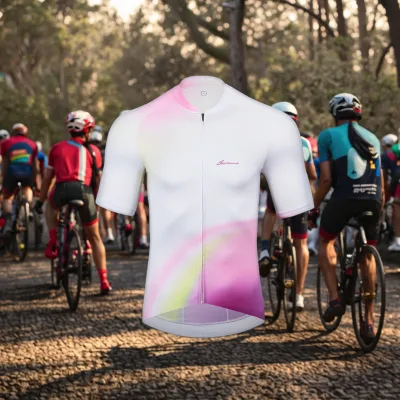
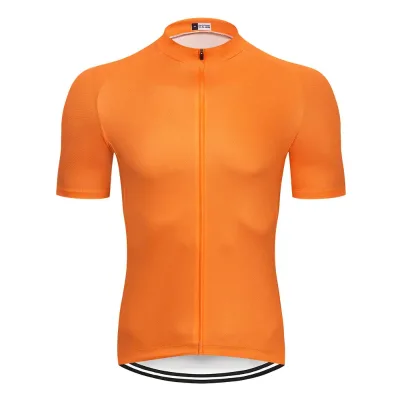
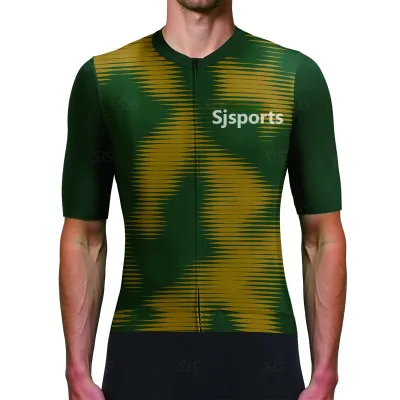


Comprehensive Sourcing Guide
Strategic Sourcing Guide for Quick Drying Slim Fit Cycling Jerseys
Understanding Technical Specifications and Material Composition
When sourcing a quick drying slim fit cycling jersey, the primary objective is to identify products that balance aerodynamic efficiency with moisture management capabilities. Based on current market observations, the core material composition for these garments is predominantly polyester, often listed as 100% polyester or a blend involving Spandex. This material selection is critical because polyester provides the structural integrity required for a slim fit while offering the hydrophobic properties necessary for quick-drying performance. The inclusion of Spandex is frequently observed to enhance elasticity, ensuring the garment maintains its shape and compression characteristics during high-intensity movement.
The fabric weight is a significant technical differentiator in this category. Observations indicate a standard fabric weight of approximately 160 grams per square meter for high-performance cycling jerseys. This weight class suggests a balance between durability and breathability, suitable for summer riding conditions where heat dissipation is paramount. The construction often features mesh fabric panels, particularly in high-sweat areas, to facilitate airflow. The technical manufacturing methods employed include automated cutting and sublimation transfer printing. Automated cutting ensures precise pattern matching and minimizes fabric waste, which is essential for maintaining the slim fit geometry. Sublimation printing allows for full-color, seamless designs that do not crack or peel, adhering strictly to the fabric fibers rather than sitting on top of them.
| Feature Category | Observed Specification | Procurement Implication |
|---|---|---|
| Primary Material | 100% Polyester or Spandex/Polyester blend | Ensures durability and moisture-wicking; verify blend ratios for stretch. |
| Fabric Weight | ~160 grams | Indicates lightweight construction suitable for summer and high-speed riding. |
| Sleeve Length | Short Sleeve | Standard for summer cycling; verify specific cm measurements for fit. |
| Printing Method | Sublimation transfer print | Guarantees vibrant, durable graphics that do not compromise fabric breathability. |
| Closure Type | Full Zipper | Essential for temperature regulation; check zipper quality and smoothness. |
| Fit Style | Slim / Characterized as "Slim" | Requires precise size grading (XXS to 5XL) to ensure aerodynamic fit. |
Buyers must verify that the "slim fit" designation is not merely a marketing term but is supported by the garment's cut and the inclusion of elastic materials. The size range observed extends from XXS to 5XL, indicating a broad inclusivity, but the specific grading for each size must be consistent to maintain the intended aerodynamic profile.
Compliance, Certification, and Safety Verification
In the realm of B2B procurement for athletic wear, compliance and safety are non-negotiable. While specific certification statuses like OEKO-TEX are noted in background data, buyers should not assume a specific product holds this status unless explicitly verified in the supplier's documentation. Instead, the procurement strategy must focus on verifying the presence of needle detection systems. The supplied data confirms that needle detection is a standard feature in the manufacturing process for these jerseys. This is a critical quality control step to ensure that no metal fragments remain in the finished garment, which poses a safety risk to the end-user.
Buyers should request evidence of the needle detection protocol, including the frequency of checks and the sensitivity settings used. Furthermore, while "Eco-Friendly" and "Recyclable" are listed as features, these claims require substantiation. Procurement teams should ask for specific details regarding the recyclability of the polyester or Spandex blends used. Are the materials sourced from recycled post-consumer waste? Is the production process certified for low carbon emissions? Without specific data, these attributes should be treated as observations rather than guaranteed claims.
The "Needle detection: Yes" attribute suggests a commitment to safety, but it is the buyer's responsibility to confirm that this is a standard operating procedure for the entire production run, not just a random check. Additionally, the "Automated cutting" and "Other" technical methods imply a high level of process control, which often correlates with better compliance with international labor and safety standards. However, buyers must independently verify the supplier's adherence to relevant labor laws and environmental regulations in the place of origin, which is identified as Guangdong, China.
Cost Drivers and Pricing Dynamics
The pricing structure for quick drying slim fit cycling jerseys is influenced by several key variables, including material costs, customization complexity, and order volume. The observed price range in the market spans from $2.31 to $39.00 USD. This wide disparity indicates that the final cost is heavily dependent on the level of customization and the quality of materials selected. The lower end of the spectrum likely corresponds to standard, off-the-shelf designs with minimal customization, while the higher end reflects complex sublimation patterns, premium fabric blends, or specialized features like full-zipper closures with high-quality hardware.
A significant cost driver is the Minimum Order Quantity (MOQ). The data shows an MOQ range from 1 piece to 600 pieces. This flexibility allows buyers to start with small sample orders, which is ideal for testing quality and fit before committing to large-scale production. However, the unit price will inevitably decrease as the order volume increases. Buyers should negotiate based on tiered pricing structures, understanding that the cost per unit is not static.
Another factor influencing cost is the "OEM service" and "ODM service" availability. Customizing logos, team names, and personal names adds value but also increases the production complexity and cost. The "Logo position" is flexible, with options for the front, back, left sleeve, right sleeve, lower hem, and back neck. Each additional logo placement or color variation can impact the setup costs and the per-unit price. Buyers must balance the desire for extensive customization with the budget constraints, ensuring that the added cost aligns with the brand value they intend to create.
Typical Applications and Market Segmentation
The primary application for quick drying slim fit cycling jerseys is competitive and recreational cycling. The "Season: Summer" designation highlights the garment's suitability for warm-weather riding, where breathability and sweat-wicking are critical. The "Quick Dry" and "Sweat-Wicking" features are specifically engineered to manage moisture during high-exertion activities, preventing the garment from becoming heavy and uncomfortable. The "Slim" fit is designed to reduce air resistance, making it a preferred choice for road cycling and triathlon events where aerodynamics play a significant role.
Beyond professional cycling, these jerseys are also applicable to team sports and corporate events. The "Team: Can be customized for cycling teams" attribute suggests a strong market for group orders. Teams often require uniformity in appearance, which can be achieved through the "OEM" and "ODM" services. The ability to add "Personalized name" and "Team Name" makes these jerseys suitable for club events, charity rides, and corporate team-building activities.
The "Gender: Unisex" or "Men, Women, Boys, Girls" classification indicates versatility. While the slim fit is often associated with men's cycling, the availability of sizes for women and children expands the market reach. Buyers should consider the specific fit requirements for different demographics. For instance, women's jerseys may require different cut adjustments to accommodate body shape while maintaining the slim, aerodynamic profile. The "Style: Shirts & Tops" and "Cycling wear" categorization confirms that these products are designed for active use rather than casual wear, though the aesthetic appeal often allows for casual adoption.
Supplier Evaluation and Service Capabilities
Evaluating a supplier for cycling jersey procurement requires a deep dive into their service capabilities and operational flexibility. The "Supply Type: OEM service" and "Service: OEM / ODM" indicate that the supplier is equipped to handle custom manufacturing requests. This is a crucial capability for buyers looking to create a unique brand identity. The "Logo position" flexibility and the ability to customize "Color," "Pattern," and "Logo" demonstrate a high level of adaptability.
Buyers should assess the supplier's sample order process. The data confirms that "7 days sample order lead time" is supported, and "Sample order: available." This rapid turnaround is essential for accelerating the product development cycle. A supplier that can provide a physical sample within a week allows buyers to verify the "Slim fit," "Quick dry," and "Breathable" claims before placing a bulk order. The "Available Quantity: Customize" attribute suggests that the supplier can scale production to meet varying demand levels, from small boutique orders to large team uniform projects.
The "Place of Origin: Guangdong, China" is a significant factor in supplier evaluation. Guangdong is a major manufacturing hub for textiles and apparel, known for its supply chain efficiency. However, buyers must verify the specific factory's capacity and reputation. The "Needle detection: Yes" feature is a positive indicator of quality control, but it should be part of a broader quality assurance framework. Buyers should request a detailed production timeline, including the lead time for bulk orders, which may vary based on the complexity of the design and the order volume.
Quality Control and Long-Term Procurement Considerations
Maintaining consistent quality is paramount in long-term procurement. The "Feature: Breathable, Eco-Friendly, Quick Dry, seamless, lightweight, Recyclable, Sweat-Wicking" list provides a checklist for quality verification. Buyers should establish a quality control protocol that tests these specific attributes. For instance, "Quick Dry" performance can be verified through standardized moisture-wicking tests, while "Breathable" claims can be assessed through air permeability tests. The "seamless" attribute suggests a specific construction method that reduces chafing, which should be inspected visually and tactilely.
The "Single gross weight: 0.350 kg" and "Single package size: 45X35X3 cm" are critical for logistics planning. These dimensions and weights influence shipping costs and storage requirements. Buyers should calculate the total landed cost, including freight, duties, and handling fees, based on these specifications. The "Selling Units: Single item" indicates that the product is packaged individually, which is standard for retail but may require repackaging for bulk team orders.
Long-term procurement considerations include the scalability of the supplier and their ability to maintain quality over multiple production runs. The "Model Number" variations, such as "EU055," "custom team," and "Cycling jersey," suggest a flexible product line. Buyers should ensure that the supplier can maintain consistency in the "Fabric Weight" and "Material" composition across different batches. The "Needle detection" process should be documented and audited regularly to ensure ongoing compliance.
| Quality Aspect | Verification Method | Long-Term Risk Mitigation |
|---|---|---|
| Moisture Management | Sweat-wicking and quick-dry testing | Regular batch testing to ensure fabric performance does not degrade. |
| Durability | Seam strength and fabric tear tests | Verify "Automated cutting" precision to prevent premature wear. |
| Safety | Needle detection audit | Require continuous monitoring logs from the supplier. |
| Consistency | Size and color variance checks | Establish a tolerance limit for "Color" and "Size" variations. |
| Logistics | Package weight and dimension verification | Optimize shipping based on "Single package size" and "Gross weight." |
By focusing on these technical and operational details, buyers can build a robust supply chain for quick drying slim fit cycling jerseys. The combination of verified material properties, flexible customization options, and rigorous quality control measures ensures that the final product meets the high standards expected in the cycling market.
FAQs
Can I order a single sample of the cycling jersey?
Yes, sample orders are available with a minimum order quantity of just one piece. The supplier supports a 7-day lead time for these sample requests, allowing quick verification of the slim fit and quick-dry features before bulk production.
What material is used for the quick drying slim fit cycling jersey?
The jersey is primarily constructed from 100% polyester or a blend of Spandex and Polyester. This material composition ensures the garment remains lightweight, breathable, and capable of quick drying while maintaining the necessary elasticity for a slim fit during cycling.
How is the logo positioned on the cycling jersey?
Logos can be placed on the front, back, left sleeve, right sleeve, lower hem, and back neck. The supplier offers full customization for these positions using sublimation transfer printing, which ensures the graphics do not crack or peel during use.
What is the minimum order quantity for custom team jerseys?
The minimum order quantity starts at one piece, allowing for small batch testing or individual purchases. However, bulk orders can range up to 600 pieces, with pricing and customization options scaling based on the total volume ordered.
Does the manufacturing process include safety checks for metal?
Yes, the production process includes needle detection to ensure no metal fragments remain in the finished garment. This safety feature is standard for the cycling jerseys, providing assurance that the product meets basic safety requirements for end-users.
Which sizes are available for the slim fit cycling jersey?
Sizes range from XXS to 5XL, covering a wide spectrum of body types including men, women, boys, and girls. The extensive size range ensures that the slim fit design can be accommodated by various demographics without compromising the aerodynamic profile.
Can the jersey be customized for specific cycling teams?
Yes, the supplier offers OEM services to customize team names, personal names, and logos for cycling teams. Buyers can specify colors, patterns, and fabric weights, making it possible to create unique uniforms that reflect the team's identity and branding.